The so-called “Edge Zones” have a historic background, as well as a modern take.

In the Viking Age no towns or villages were fortified. Everybody could walk through any settlement, and be wherever we wanted to be. If attacked, we would simply meet the enemy in the fields (and if you study the Danish national football team, you’ll see that we still don’t understand the concept of defence).
This idea of boundless universal access was challenged as the city grew dense during the industrialisation, but revived, partly thanks to modern city planners and architects like Jan Gehl, at the turn of the millennium.
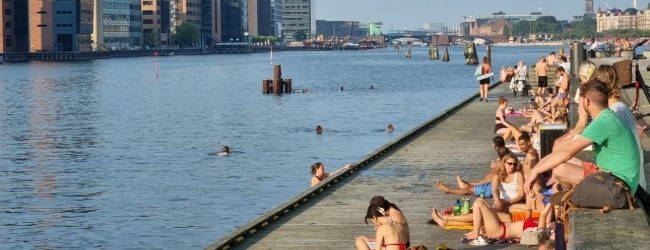
In Copenhagen you will notice that many buildings have an “Edge Zone”, a space on the plot that is open to the public, inviting and engaging, with benches, outdoor grills, exercise facilities, playgrounds, or simply a place to enjoy brought food and drinks.
What characterizes an “Edge Zone” is that it is open 24/7, welcoming and non-commercial. It’s a local architectural term, and in many other places around the world it is simply known as “Copenhagenization”.

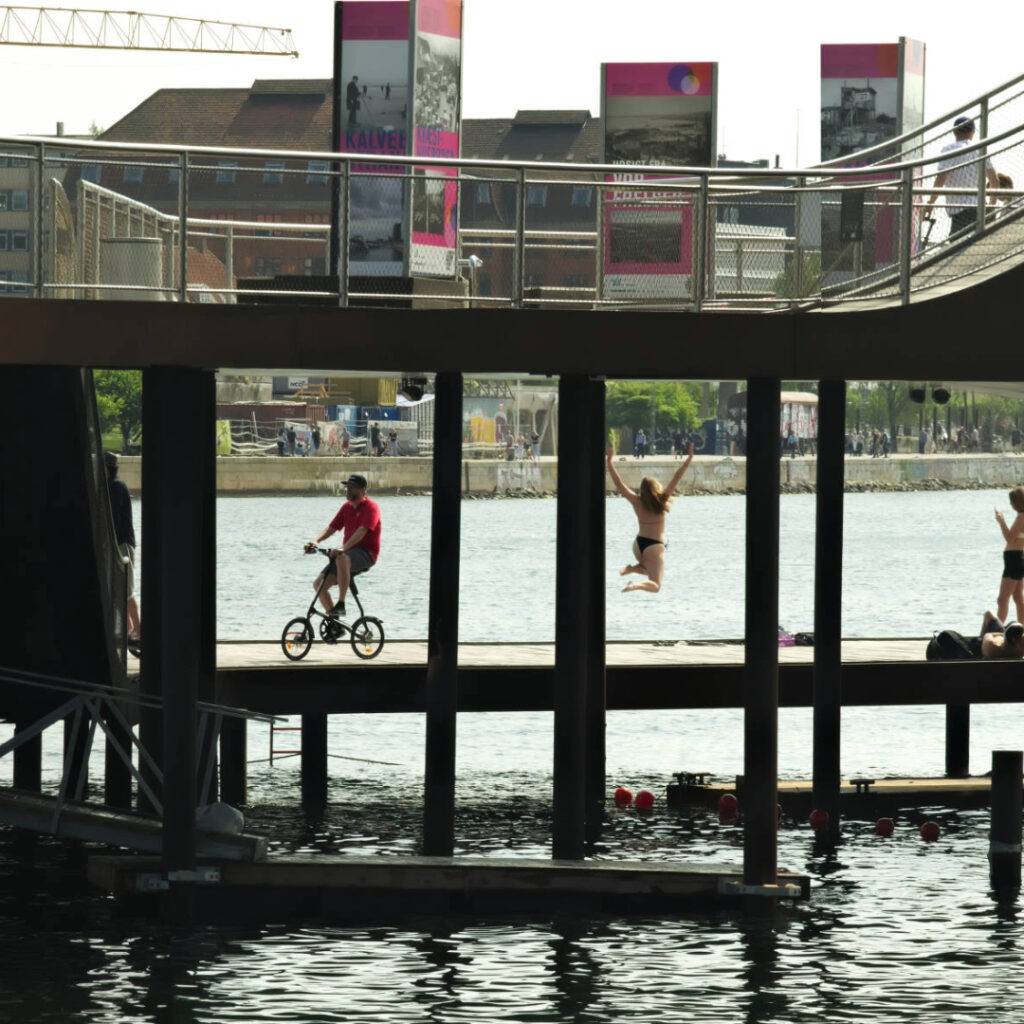
But in many cases these “Edge Zones” are not on the edge of a building at all, but in the middle of a boulevard (Halmtorvet and Sønder Boulevard), or stretching out over the inner harbour (The Wave).
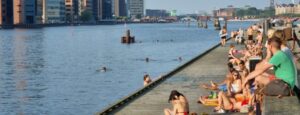
Especially along the inner harbour you will find innumerable places to sit, hang, chill, do some exercise, or enjoy a picnic.
The city is our urban living room. We don’t expect – and accept – to be denied access anywhere. This is one of the reasons we can’t – and won’t – criminalise public nudity, alcohol consumption, and lots of other “private” behavior in public spaces.

While most power plants around the world will have strict access forbidden, with fences and gates, CopenHill is different: free access to the rooftop, café, running route, and hiking. The elevator is also free to use all the way to the top, where you will obviously find a bar, and the best view of Copenhagen and its suburbs, including Malmö on the other side of the strait.
Why walk down when you can ski? The roof is sloped and fitted with a synthetic material that makes it possible to ski all the way down, all year round (and come back up with a ski lift).
Once a visitor to the city put it so eloquently: “If you find a closed door, try the handle”.

Right next to Torvehallerne and Nørreport Station, you’ll find a large square space named Israels Plads. This square – with places to sit and space to play ball – is in fact the playground for two schools on opposite sites of the square, on weekends it houses flea markets, and lots of people go there to enjoy food from Torvehallerne. Below ground it houses a large car park and an even larger bicycle parking space. The square flows seamlessly into the streets on three sides, and the park (H.C. Ørestedparken) on the fourth, with nothing more than a discrete marking in the ground to show the children where it ends. Cars go cautiously by, as everybody knows a runaway football might cross the street.

Outside Hal C – a somewhat uninteresting little sports hall – you’ll find a busy bike lane and a small canal. With a little carpentry, they have transformed the side of the building and the edge of the canal into an “Edge Zone” where you can sit and read a book, or whatever you want. Every Wednesday, during the summer months, the bike path is closed and burgers are served accompanied by a DJ. Somewhere between 500 and 800 people show up to enjoy the experience.

Perhaps the most profound sentence about Copenhagen is: “You’re welcome”.
Hasse “Hassan” Sørensen