The story of Freetown Christiania is not just a history; it is a living, turbulent saga of an improbable dream carved out of a forgotten corner of Copenhagen—an anarchist commune existing within one of the world’s most orderly countries.
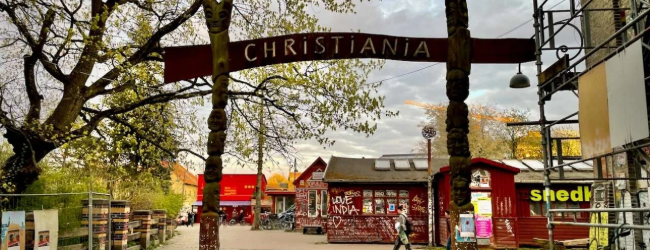
The Birth of the Free State (1971)
The stage was set on the tranquil island of Christianshavn, where lay the sprawling, abandoned Bådsmandsstræde military barracks. For years, the land—a mix of old fortifications, overgrown parkland, and derelict buildings—had been silently guarded by a rusty fence.
It was 1971, and the world was alight with counter-culture movements. Copenhagen, a city known for its civility, soon found itself home to a bold act of rebellion. The local families, fed up with the lack of decent playgrounds, simply cut a hole in the fence.
What began as a space for children quickly blossomed into something far grander. Waves of squatters—hippies, activists, artists, and idealists—poured in, claiming the deserted barracks. They saw not decay, but potential. A visionary journalist named Jacob Ludvigsen then famously declared the area a Freetown, independent of Danish law.
Their creed was simple, radical, and utopian: to create a self-governing society where the well-being of the whole was the responsibility of every individual. They raised their own flag, crafted their own rules (no hard drugs, no guns, no violence), and set about building a new world.
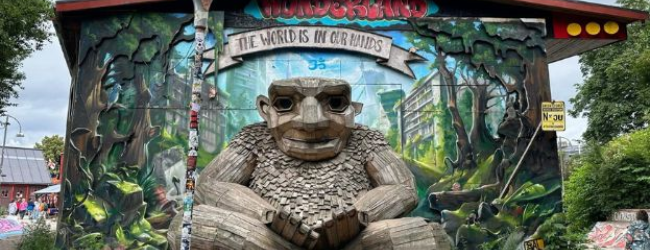
The Golden Age and the Shadow
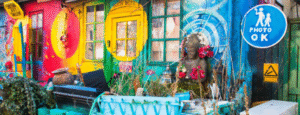
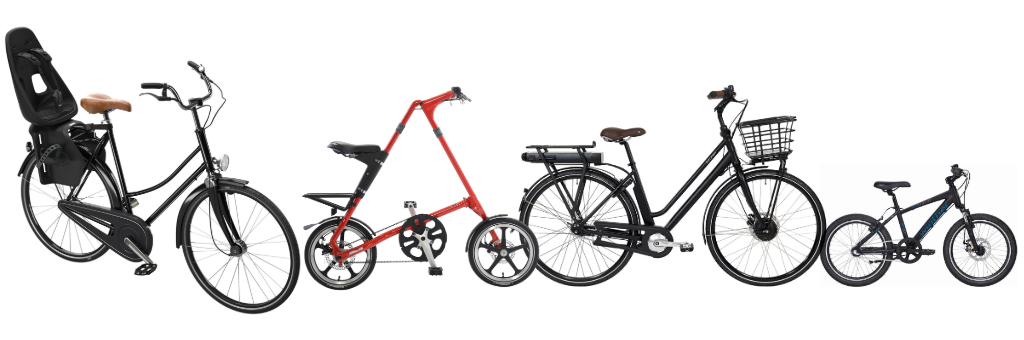
In its early years, Christiania was a vibrant, chaotic, and inspiring utopia. The residents, known as Christianites, began to construct homes with found materials, leading to the district’s wildly imaginative and self-built architecture. Old stables were turned into theaters, and military buildings became communal living spaces. They established their own collective economy, bicycle workshops, bakeries, and music venues. It was an explosion of creativity and political idealism.
The Danish government, unsure how to handle a peaceful but illegal occupation in the heart of its capital, adopted a reluctant neutrality, labeling Christiania a “social experiment” and letting it run its course.
Yet, a shadow soon fell over the Freetown.
Due to the lack of police presence and the Christianites’ strong belief in non-interference, a central walkway in the Freetown became known as Pusher Street. Here, cannabis was sold openly, creating a lucrative, unregulated market. For a time, some argued that concentrating the hash trade minimized its spread elsewhere in the city. However, the trade eventually attracted organized criminal gangs, and the initial ideals of communal freedom began to rub uncomfortably against the reality of crime and violence.
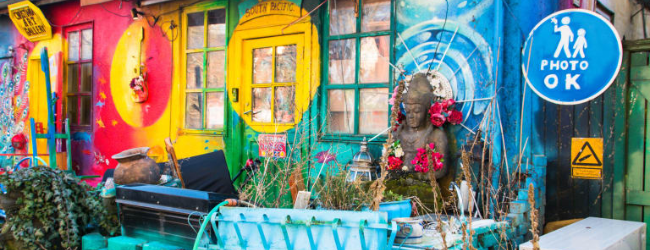
The Battle for the Dream
The next four decades were defined by a relentless tug-of-war between the Christianites and the Danish state.
The government repeatedly tried to evict the squatters, taking the case to Denmark’s Supreme Court, which ruled that the state had the right to clear the area. But the community, supported by massive public sympathy and fierce resistance, refused to budge. The Christianites won the moral battle again and again, ensuring their survival.
The true turning point came in the 21st century. After years of legal wrangling, a monumental agreement was reached in 2011/2012. The residents, in a move that legitimized their existence, agreed to form a foundation to purchase and lease the land from the state. The anarchists became reluctant property owners, saving their Freetown through a collective sacrifice of principle.
The final, dramatic chapter in this ongoing story unfolded recently. After a series of violent incidents tied to the cannabis trade, the residents themselves decided to reclaim their neighborhood from the gangs. In a profoundly symbolic act in 2024, Christianites gathered to dig up the cobblestones of Pusher Street, formally declaring an end to the open drug market and signaling a collective return to their founding ethos of peace and community control.
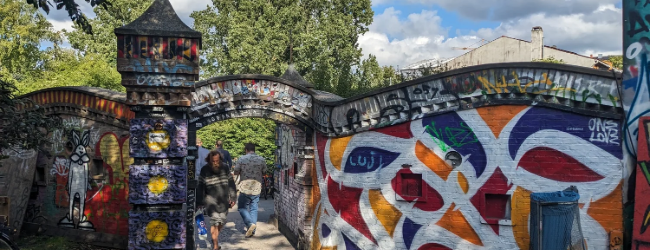
Today, Christiania endures—a captivating, sometimes troubled, but always fiercely independent haven. It remains a magnet for tourists and a living testament to the powerful, enduring human desire for an alternative way of life.
Hasse “Hassan” Sørensen