How Copenhagen Redefined Global Gastronomy
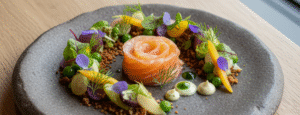
Copenhagen. It’s a city synonymous with design, hygge, and a cycling culture that puts the rest of the world to shame. But in the last two decades, the Danish capital has quietly, yet decisively, reshaped the global culinary landscape, giving birth to a movement known as New Nordic Cuisine or Nordisk Mad.
Forget what you thought you knew about Scandinavian food. This isn’t just about meatballs and herring (though they have their place!). New Nordic Cuisine is a philosophy, a revolution, and a delicious journey back to the roots of a region, all while pushing the boundaries of innovation.

The Manifesto That Started a Movement
The story of New Nordic Cuisine truly began in 2004 when a group of influential Nordic chefs, spearheaded by, among others, René Redzepi of NOMA, drafted the “New Nordic Cuisine Manifesto.” This wasn’t just a list of ingredients; it was a declaration of intent, outlining ten principles that would guide their culinary endeavors:
- To express the purity, freshness, simplicity and ethics we wish to associate with our region.
- To reflect the changing of the seasons in the meal we serve.
- To base our cooking on ingredients whose characteristics are particularly excellent in our climates, waters and landscapes.
- To combine the demand for fine tastes with the demands for public health and the spreading of knowledge about the benefits of Nordic Food.
- To promote animal welfare and a sound production process in the sea, on the cultivated land and in the wild.
- To develop new potential applications of Nordic food products.
- To combine the best in Nordic cookery and culinary traditions with impulses from abroad.
- To promote the natural spread of Nordic culinary culture.
- To create a collaboration between the consumers, other food professionals, agriculture, fishing, and the food industry.
- To discover the potential for well-being in Nordic food.
At its core, it was a call to look inwards, to celebrate and innovate with the incredible bounty of the Nordic region – from its cold waters to its vast forests and fertile, if sometimes challenging, lands.
What Does New Nordic Cuisine Taste Like?
Imagine foraging for ingredients in a nearby forest, pulling fresh seafood straight from the Øresund, or sourcing vegetables from a local farm just hours before they hit your plate. That’s the essence.
Menus change not just monthly, but sometimes weekly or even daily, reflecting exactly what’s at its peak. Ingredients are sourced almost exclusively from the Nordic region, fostering a connection between plate and place.

And then it gets weird
The confusion arose at a later point for a number of reasons.
- Danes often make abbreviations of the first two letters of words, e.g. “Leg Godt” (play well) became LEGO. “Nordisk Mad” (Nordic Food) became NOMA. NOMA was, and to some extend still is, a common name for the unorganised movement of chefs working to revive the Nordic Cuisine.
- The chef René Redzepi decided to open a restaurant simply named NOMA. Six years in a row awarded the best restaurant in the world!
If I’m not eating at NOMA, what should I eat in Copenhagen?
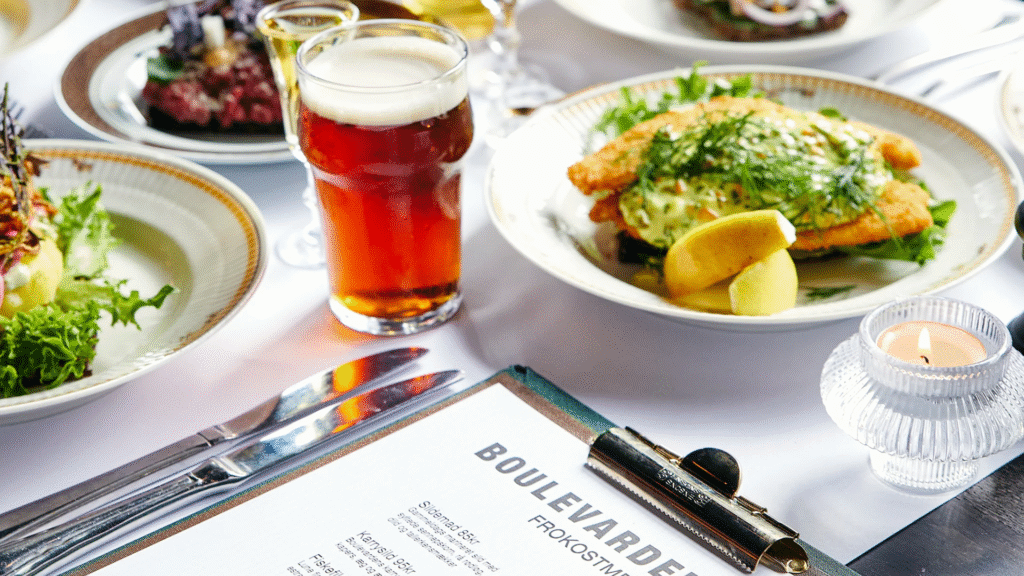
Smørrebrød (open face sandwiches) of course. A thin compact slice of dark rye bread with a primary topping of pork or fish, with a number of additiona toppings.
We can recommend restaurant Maven, right across the intersection from our shop, or – if you are ready to work for it – the amazingly good and authentic Boulevarden 129 (Amager Boulevarden 129, 2300 København S).
A hotdog! Yeah, it sounds weird. You can get a hotdog anywhere in the world. But the thing with the hotdogs in Copenhagen is that they have something unique in common with the Smørrebrød: The number of toppings is ridiculous!
Go to a hotdog stand in the pedestrian streets and ask for a grilled hotdog with everything. From that point, what ever they ask you, say “Yes!”

Hasse “Hassan” Sørensen